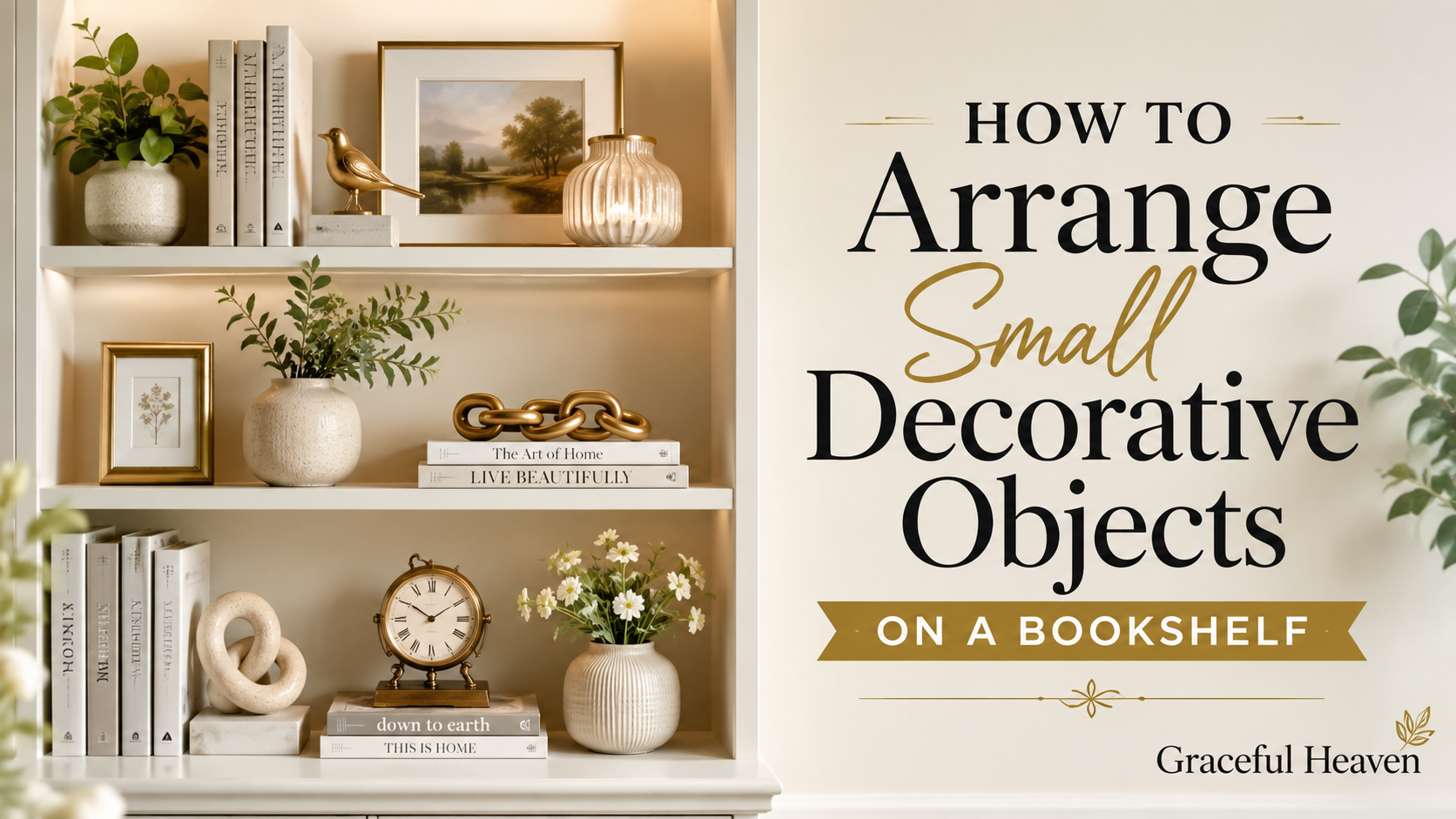
You know that bookshelf. The one with a random candle, three books lying flat for no reason, and a plant that’s been dying since March. 🪴 It doesn’t look bad exactly. It just looks… unplanned. And that’s the real issue with most shelves. Not bad taste. Just no plan.
Let’s fix that.
Start With Less Than You Think You Need
Here’s the thing nobody tells you: your shelf is probably too full already. Pull everything off. Every book, every trinket, every mystery seashell from a beach trip you don’t remember. Now look at the empty shelf. Feels weird, right? Almost too open. Good. That emptiness is your canvas. 🎨
Pick your favorites first. Not all of them — just five or six pieces that actually mean something to you. A ceramic bowl from your grandmother. A small framed photo. That weird little brass elephant you bought on a whim and now can’t imagine living without. Set the rest aside for later. You probably won’t need most of it.
Group in Odd Numbers
Designers love threes. There’s a reason for that.
Even numbers create pairs, and pairs feel static. They sit there, matched and symmetrical, like two shoes lined up at attention. Odd numbers — three, five, seven — create movement. Your eye travels between them instead of locking into a stare-down. 👀
So instead of two candles side by side, try one candle, one small stack of books, one tiny plant. Three objects, three heights, one story.
Play With Height Like You’re Building a Skyline
Flat objects lying next to other flat objects is the fastest way to kill a shelf. Boring. Predictable. Forgettable.
Think about a city skyline instead. Some buildings are tall. Some are short. Some are wide. That contrast is what makes it interesting to look at. Do the same thing here — stack a few books to create height, then rest a small object on top. Add a taller vase behind a shorter bowl. Layer, don’t line up.
Use Books as Props, Not Just Books
This one trips people up. Books don’t always need to stand upright in a row like soldiers.
Try laying a small stack flat, then placing a decorative object right on top — a small sculpture, a paperweight, a tiny framed print. It instantly adds height variation without buying anything new. 📚 And it makes your books feel like part of the design instead of just… filler.
Turn a few spines inward occasionally too, especially if the book has a plain or textured cover. Not every book needs to shout its title at guests.
Color Isn’t Random — Repeat It
Imagine your shelf is a room. You wouldn’t paint every wall a different color and call it “eclectic.” You’d probably lose your mind looking at it. 🙃
Shelves work the same way. Pick two or three colors max, and repeat them across the shelf. Maybe it’s brass and cream. Maybe it’s deep green and black. When your eye sees the same color pop up in three or four spots, it reads as intentional, even if you didn’t plan every piece to match.
Leave Breathing Room
Negative space isn’t wasted space. It’s rest for your eyes.
Cramming a shelf edge to edge with objects is exhausting to look at, honestly. It’s like a conversation where someone never pauses to breathe. So after you arrange a grouping, step back and ask: does this need one more empty inch? Usually the answer is yes.
Anchor With One Big Piece Per Shelf
Every shelf needs a hero. One larger object — a bigger vase, a substantial book stack, a sizable piece of art propped against the back — gives your eye somewhere to land first. Everything else supports it.
Without an anchor, small objects just float around competing for attention. With one, suddenly the whole thing feels curated instead of cluttered. 🏺
Mix Textures Like You’re Mixing Flavors
A shelf of all-smooth, all-shiny objects feels a little cold. A shelf of all-rough, all-matte objects feels a little heavy. You want both.
Pair a smooth ceramic vase with a woven basket. Set a glossy picture frame next to a rough stone bookend. Think about how a good meal balances crunchy and soft, sweet and salty — texture on a shelf works the exact same way.
Personal Objects Beat Generic Decor Every Time
Nobody remembers the shelf with matching store-bought vases. People remember the shelf with a little handwritten note in a frame, or a shell from an actual trip, or a chunky ceramic mug your kid made in art class. 💛
So don’t be afraid to include something a little odd. That’s usually the piece guests ask about.
Step Back Often
Arrange three objects. Walk to the other side of the room. Look again.
You’ll catch things up close that you’d never notice from a distance — and vice versa. What feels balanced at arm’s length can look lopsided from across the room. Keep adjusting in small moves rather than overhauling the whole shelf each time.
A Quick Scenario
Say you’ve got a small floating shelf above your desk. You’ve got: a stack of three books, a small potted succulent, a framed photo, and a tiny brass bowl for loose change.
Here’s how it might come together — books stacked flat on the left, standing slightly taller than everything else. Succulent perched on top of the stack, adding a touch of green near the top. Framed photo leaning just behind, at a slight angle. Brass bowl sitting alone on the right, giving your eye a resting point after all that layering.
Five objects. Three heights. One clear visual path from left to right. That’s it. That’s the whole trick. ✨
Don’t Forget the Wall Behind It
If your shelf backs onto a plain wall, consider adding a small piece of art or a patterned panel behind one section. It gives depth to the whole arrangement and stops everything from looking flat against a blank background.
Rotate Things Seasonally
Your shelf doesn’t have to stay frozen in one arrangement forever. Swap in a small pumpkin during fall. Add a pinecone or two in winter. Bring in fresh flowers come spring. 🌸 Small seasonal touches keep the space feeling alive instead of static, and it gives you a low-effort reason to revisit the whole layout every few months.
The Real Secret? Trust Your Eye
You can follow every rule here and still end up rearranging things a dozen times. That’s normal. Good shelf styling isn’t really about rules — it’s about noticing what feels off and adjusting until it doesn’t anymore.
So go pull those objects off your shelf right now. Play around. Move things an inch to the left, then back again. You’ll know it’s right when you stop wanting to touch it. 🕯️