Your patio table is tiny. Maybe it’s a two-seater bistro set wedged between a railing and a wall. Maybe it’s a fold-out café table you bought for $40 and never quite dressed up. Either way, you keep scrolling past photos of gorgeous outdoor tablescapes and thinking, “sure, but they have space.” You don’t need space. You need a plan. 🪴
That’s what this is. A real plan, not a vague “just add some plants and vibes” suggestion.
Why Mini Planters Are the Secret Weapon for Small Spaces
Big planters overwhelm a small table. They hog the surface, block sightlines, and make it awkward to actually set down a coffee cup. Mini planters do the opposite. They add life and color without eating up your usable space. Think of them as jewelry for your table, not furniture. 💍
Here’s the thing about small-scale design: it’s actually harder than decorating a big space. When you have a 24-inch round table, every inch counts. One wrong-sized pot and the whole thing looks cluttered instead of curated. So we’re going to get specific.
Step One: Actually Measure Your Table
I know, I know. Measuring feels like homework. But skip this step and you’ll end up buying planters that are either laughably small or way too bulky.
Grab a tape measure. Note the diameter (for round tables) or the length and width (for rectangular ones). Now subtract about 30% of that space mentally — that’s the area you should reserve for actual use. Plates, drinks, elbows. The remaining 70% is your planter real estate.
A table under 20 inches wide? You’re working with mini planters in the 2 to 3 inch range, maybe three or four of them total. A slightly bigger 30-inch table gives you room for a small cluster arrangement, maybe five or six pots of varying sizes. 📏
Choosing the Right Mini Planters
Not all tiny pots are created equal. Some genuinely upgrade your table. Others just look like leftover nursery containers you forgot to repot.
Material Matters More Than You’d Think
Terracotta is the classic choice, and for good reason. It’s porous, so it helps prevent overwatering, and it develops this lovely weathered patina over time. But it also cracks in freezing temperatures if you live somewhere cold. Keep that in mind before you invest in a full set.
Ceramic and glazed pots bring color into the mix. A cobalt blue glazed mini pot against green succulents? Stunning. These hold moisture a bit longer than terracotta, which is handy if you’re the type who forgets to water for a few days.
Concrete planters are having a moment right now. They’re heavy for their size, which is actually a plus on a windy patio — nothing worse than a gust knocking your tiny planter off the table and shattering it on the ground. 💨
Then there’s the budget option: recycled tin cans, painted mason jars, even old teacups. Honestly? These can look more charming than store-bought sets if you do them right. A mismatched collection of vintage teacups holding tiny herbs has serious cottagecore energy, and it costs you almost nothing.
Size Variation Is Not Optional
Never buy planters that are all identical in size. It’s a rookie mistake. Uniform pots read as sterile, like a display at a garden center rather than a table someone actually lives with. Mix at least two, ideally three different heights and widths.
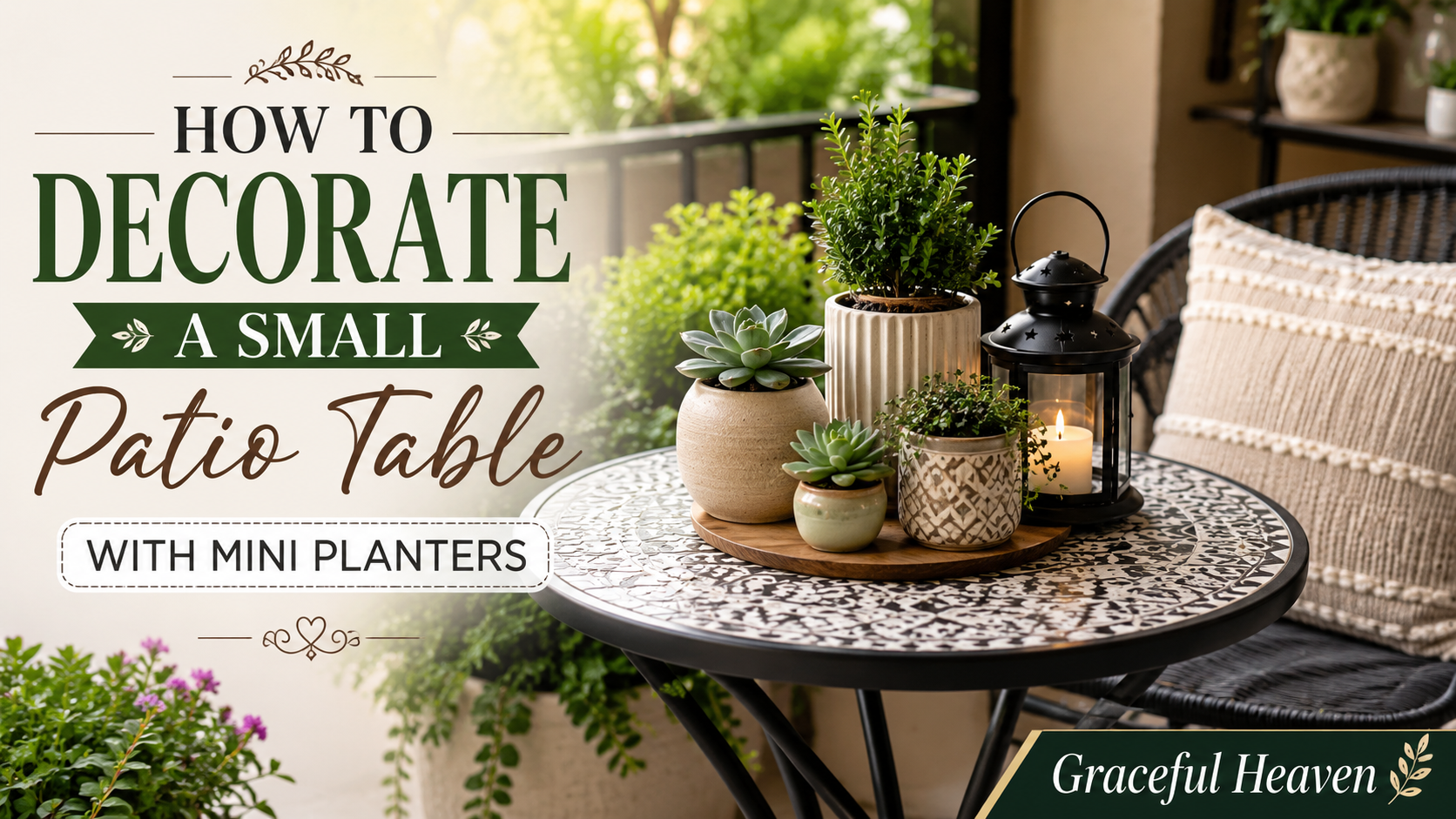
Picture this: a 4-inch pot in the back, a 3-inch one slightly forward and to the side, and a squat little 2-inch pot tucked in front. That’s a triangle. Designers use this shape constantly because your eye naturally finds it pleasing. It’s not an accident — it’s math dressed up as art. 📐
Picking Plants That Actually Thrive on a Small Table
This part trips people up. They pick plants based purely on looks, then wonder why everything’s dead in three weeks.
Succulents and Cacti: The Low-Maintenance Champions
If you travel a lot, or if you’re just not a plant person yet, start here. Echeveria, haworthia, and small barrel cacti tolerate neglect beautifully. Water them once every one to two weeks. That’s it. 🌵
They also love full sun, which is exactly what most patio tables get in the afternoon. Win-win.
Herbs: Beauty You Can Actually Eat
Here’s an idea most people overlook. Plant thyme, oregano, or dwarf basil in your mini planters. Now your centerpiece doubles as your spice rack. Cooking dinner and need a pinch of thyme? It’s sitting right there on the table. 🌱
Small mint varieties work too, though mint is aggressive — keep it contained in its own pot or it’ll take over everything else.
Trailing Plants for Softness
String of pearls, creeping jenny, or baby tears spill gently over the edge of a pot and soften all those hard lines on your table. One trailing plant mixed among upright succulents creates instant visual interest. Without it, everything just sits there stiffly, like soldiers in formation.
Seasonal Flowers for Bursts of Color
Miniature marigolds, dwarf petunias, or pansies bring color that succulents simply can’t. They need more water and more attention, sure. But for a few months of vivid orange, purple, or yellow blooms? Worth the extra five minutes a week. 🌸
Arranging Everything So It Actually Looks Intentional
You’ve got your pots. You’ve got your plants. Now what?
Rule of Odd Numbers
Three pots look more natural than two. Five looks better than four. This isn’t some made-up design snobbery — it’s a genuine visual principle. Even numbers create pairs that your brain automatically wants to balance symmetrically, which reads as stiff. Odd numbers force asymmetry, and asymmetry feels organic, like something that grew that way rather than something assembled from a kit.
Layer by Height
Tallest plant toward the back or center, depending on whether your table gets viewed from one side or all sides. Medium height plants flanking it. Shortest, trailing ones up front. This creates depth on a completely flat surface, which is a neat little visual trick. 🎨
Leave Breathing Room
Don’t crowd every pot together in a clump. Give each one just enough space that it reads as its own little feature, while still feeling like part of a cohesive group. Think of a good dinner party — everyone’s close enough to talk, but nobody’s sitting on anyone’s lap.
Anchor With a Centerpiece Tray
Here’s a trick that instantly elevates any mini planter setup: put them all on a small wooden tray or a slice of live-edge wood. It groups everything visually, protects your table from water rings, and makes the whole thing easy to move indoors if rain hits. One tray, endless flexibility. ☔
Color Coordination Without Overthinking It
You don’t need a color wheel degree for this. Pick a simple approach and stick with it.
Monochrome greens. All-green plants in white or neutral pots. Clean, calming, foolproof. Works with literally any outdoor furniture.
Complementary pop. Green plants against one bold pot color — say, terracotta orange against blue-green succulents. One statement color goes a long way.
Seasonal palette. Warm oranges and deep reds in fall. Pastels in spring. Let the season guide your flower and pot choices, and swap things out every few months.
Whatever you pick, repeat it at least twice across your table. One blue pot looks random. Two blue pots look like a choice. 🎯
Budget-Friendly DIY Ideas
You genuinely don’t need to spend much here.
- Paint terracotta pots with leftover wall paint for a custom, cohesive look
- Repurpose small food jars — jam jars, spice jars — with drainage holes drilled in the bottom
- Use wine corks glued together as tiny planter bases for air plants
- Thrift store teacups make gorgeous one-of-a-kind mini planters
- Concrete stepping stone molds (the tiny ones) can be used to cast your own mini pots
A friend of mine spent less than fifteen dollars on her entire table setup using thrifted teacups and clippings from a neighbor’s succulent. It looked like something out of a magazine. Nobody guessed the price tag. 💸
Maintenance: Keeping It Looking Good, Not Just Setting It Up Once
Decorating is the fun part. Keeping it alive is where most people quietly give up.
Mini planters dry out fast. There’s just less soil to hold moisture compared to a big pot. Check them every day or two during hot months, even if that feels excessive. Stick a finger in the soil — if it’s dry an inch down, water it.
Drainage holes are non-negotiable. Without them, water pools at the bottom and rots the roots. If your cute vintage teacup doesn’t have one, either drill it or use it as a decorative outer shell around a smaller plastic pot that does have drainage.
Rotate your table every week or so if it only gets sun from one direction. Plants lean toward light, and a slow rotation keeps growth even instead of lopsided.
Common Mistakes to Avoid
So, quick gut check before you go shopping.
Don’t mix plants with wildly different watering needs in one grouping if you’re watering them together — a cactus and a fern will not have a happy ending sharing a schedule. Don’t buy planters bigger than a third of your table’s width. Don’t forget saucers or trays, unless you enjoy water stains on wood. And don’t overplant. A cramped table stresses you out every time you sit down at it, even if you can’t quite say why.
Bringing It All Together
Small patio table. Big personal statement. That’s really what this comes down to.
You don’t need acres of space or a green thumb passed down through generations to make your outdoor table feel alive. A few well-chosen mini planters, some thoughtful arranging, and a little consistency with watering will get you there. Start with three pots. See how it feels. Add from there. 🌻
Your morning coffee is about to get a much better backdrop.