Your mantel is tiny. Your budget is tinier. And every design blog you’ve opened lately seems to assume you own a farmhouse with twelve feet of ledge space and a Pinterest-perfect vase collection. 🙄
Here’s the truth nobody tells you: small mantels are actually easier to style well. Less space means less clutter, fewer decisions, and way less money spent trying to fill it. You just need a plan that works with the size you’ve got, not against it.
So let’s get into it. Eight ways to make a small mantel feel intentional, warm, and totally yours — without draining your wallet.
1. Lean Into the Power of Odd Numbers 🕯️
Design rule number one, and it’s free: group things in threes.
Three candles. Three frames. Three little ceramic bowls from a thrift store. Odd numbers create visual interest in a way that pairs just don’t. Two items look like a matched set, almost accidental. Three items look styled.
Try this on a mantel that’s maybe four feet wide. Grab a tall item, a medium item, and a short item. Vary the height. That’s it — that’s the whole trick.
Think about a candlestick, a small stack of books, and a single dried flower in a bud vase. None of it needs to be expensive. A lot of it can come from around your house already. You’re not shopping, you’re rearranging.
2. Shop Your Own Home Before You Shop Anywhere Else 🏠
This one sounds obvious. It isn’t, because most of us skip it entirely.
Before you buy a single new item, walk through your house with fresh eyes. That vase in your bedroom nobody looks at? Bring it to the mantel. The little wooden bowl holding random keys in your entryway? That could hold pinecones instead. A framed photo currently gathering dust on a bookshelf could become the centerpiece of your whole display.
We tend to see our belongings as fixed in place. As if the lamp has always lived on that side table and always will. But nothing is permanent. Moving five items from other rooms onto your mantel costs zero dollars and can completely transform the space in twenty minutes.
Do a full lap of your home first. You’ll be shocked how much you already own that just needs a new spot to shine.
3. Get a Mirror, Skip the Art 🪞
A small mantel can’t fit a big statement painting. There just isn’t room, and cramming one in makes everything feel squished.
A mirror solves this differently. Lean a mirror against the wall above the mantel instead of a piece of art, and two things happen immediately. First, it reflects light back into the room, making a small space feel bigger and brighter. Second, it doubles whatever you put on the mantel itself — your candles, your greenery, your little collection of objects all get a visual echo.
Thrift stores are goldmines for mirrors. Look for something with an interesting frame — wood, brass, even a chipped vintage one with character. You’re not looking for perfect. You’re looking for personality.
Budget tip: a plain mirror from a discount store, framed with a strip of peel-and-stick trim, looks shockingly expensive once it’s up. Nobody checks the receipt.
4. Bring in Something Alive 🌿
Every mantel needs one living element. This is non-negotiable in our book.
It doesn’t need to be fancy. A single eucalyptus stem in a $4 glass bottle does more work than an entire shelf of plastic decor. Living things — even small, humble ones — bring warmth that manufactured objects simply can’t fake.
Can’t keep plants alive? No shame in that. Dried flowers work just as well, and they last basically forever. Grocery store bouquets, dried upside down for two weeks, turn into gorgeous rustic stems for free. Baby’s breath, lavender, even wildflowers picked on a walk all dry beautifully.
Here’s a quick scenario. Picture a plain white mantel with three candles lined up neatly. Nice, but a little sterile, a little showroom. Now picture the same mantel with one trailing ivy stem draped over the edge. Suddenly it feels lived-in. That’s the entire difference a single plant makes.
5. Layer With Frames, Not Just One Big Piece 🖼️
Small mantels struggle with scale. One large frame overwhelms the space. One tiny frame looks lost and lonely.
The fix is layering. Take two or three smaller frames of different sizes, and overlap them slightly, leaning against the wall rather than hung. This creates depth. It also solves the “what if it’s crooked” anxiety — leaning frames never need a level.
Mix frame finishes too. A black frame next to a gold one next to a plain wood one doesn’t look chaotic if the photos or art inside share a similar tone. Black and white photography works especially well here because it unifies mismatched frames instantly.
Old frames from thrift shops, garage sales, or even your parents’ attic are basically free art waiting to happen. Pop in a printed photo, a pressed leaf, or a page torn from an old book. Instant styled layer, zero cost.
6. Use a Tray to Corral the Chaos 🍂
Small spaces get cluttered fast. A five-item vignette can start to look messy the second one candle shifts slightly out of line.
A tray fixes this instantly. Put your candles, your little dish, your matchbox — whatever your grouping is — onto one small tray, and the whole thing reads as a single, deliberate unit instead of scattered stuff.
This trick works because our brains categorize things by container. Items on a tray feel curated. The exact same items scattered loose on the mantel feel like you just dropped your bag and walked away.
You don’t need a fancy brass tray from a home goods store, though they’re lovely if your budget allows. A wooden cutting board works. So does a vintage serving platter from a thrift store, or even a sturdy piece of cardboard covered in leftover wallpaper scraps.
7. Play With Height Using Books You Already Own 📚
Here’s a stylist secret that costs nothing: stacked books are furniture risers in disguise.
That little vase you love gets lost sitting flat on the mantel surface. Stack two hardcover books underneath it, and suddenly it has presence. It’s elevated, literally and visually.
Vary your stack heights across the mantel. Two books here, four books there, none at all on the far end. This creates the same kind of visual rhythm we talked about earlier with odd numbers — a landscape of highs and lows instead of one flat line.
Turn the spines inward if the titles clash with your color scheme, or face them outward if you love a lived-in, “yes I actually read these” look. Either way works. There’s no wrong answer here, only your preference.
8. Rotate With the Seasons Using What’s Already Free Outside 🍁
The single cheapest styling trick in existence? Step outside.
Pinecones in autumn. A few sprigs of holly in December. Cherry blossoms in spring if you’re lucky enough to have a tree nearby. Even plain green branches trimmed from a hedge look intentional in a simple vase.
Seasonal foraging does two things at once. It refreshes your mantel regularly without spending money, and it connects your indoor space to what’s actually happening outside your window. That’s a level of intentional design most expensive decor can’t replicate.
Keep a couple of simple vessels on hand — a mason jar, an old glass bottle, a chipped pitcher — and swap the greenery every few weeks. Come Halloween, add a few small pumpkins from the dollar store. Come summer, a jar of wildflowers does the whole job by itself.
A Few Extra Things Worth Knowing 💡
Scale matters more than price. A three-dollar thrift store vase in the right size beats a fifty-dollar vase in the wrong one, every single time. Before buying anything, measure your mantel depth. Most small mantels run somewhere between four and six inches deep, and that measurement should dictate everything you place on it. Deep, bulky items will look like they’re about to fall off, even when they’re perfectly stable.
Color also does heavy lifting on a budget. Pick two or three colors max for your whole mantel, and stick to them. This one habit alone makes a random assortment of cheap and free items look like they were bought as a matching set. A neutral base — whites, creams, warm wood tones — with one accent color woven through candles, ribbon, or a single vase creates cohesion instantly.
Don’t skip lighting. Candles are the cheapest mood-setter that exists, full stop. Even a few tea lights scattered among your objects change the entire feel of a room once evening hits. Battery-operated ones work great too, especially if you’ve got kids or pets who might knock things over.
And here’s something people forget: negative space is not wasted space. A small mantel doesn’t need every inch covered. Leaving gaps between groupings actually makes each item look more valuable, more chosen. Cramming every surface full reads as clutter, not curation, no matter how nice each individual piece is.
Putting It All Together
Let’s walk through a real example. Say you’ve got a four-foot mantel, painted white, above a simple brick fireplace. Budget: basically nothing, because you just spent it all on rent. 😅
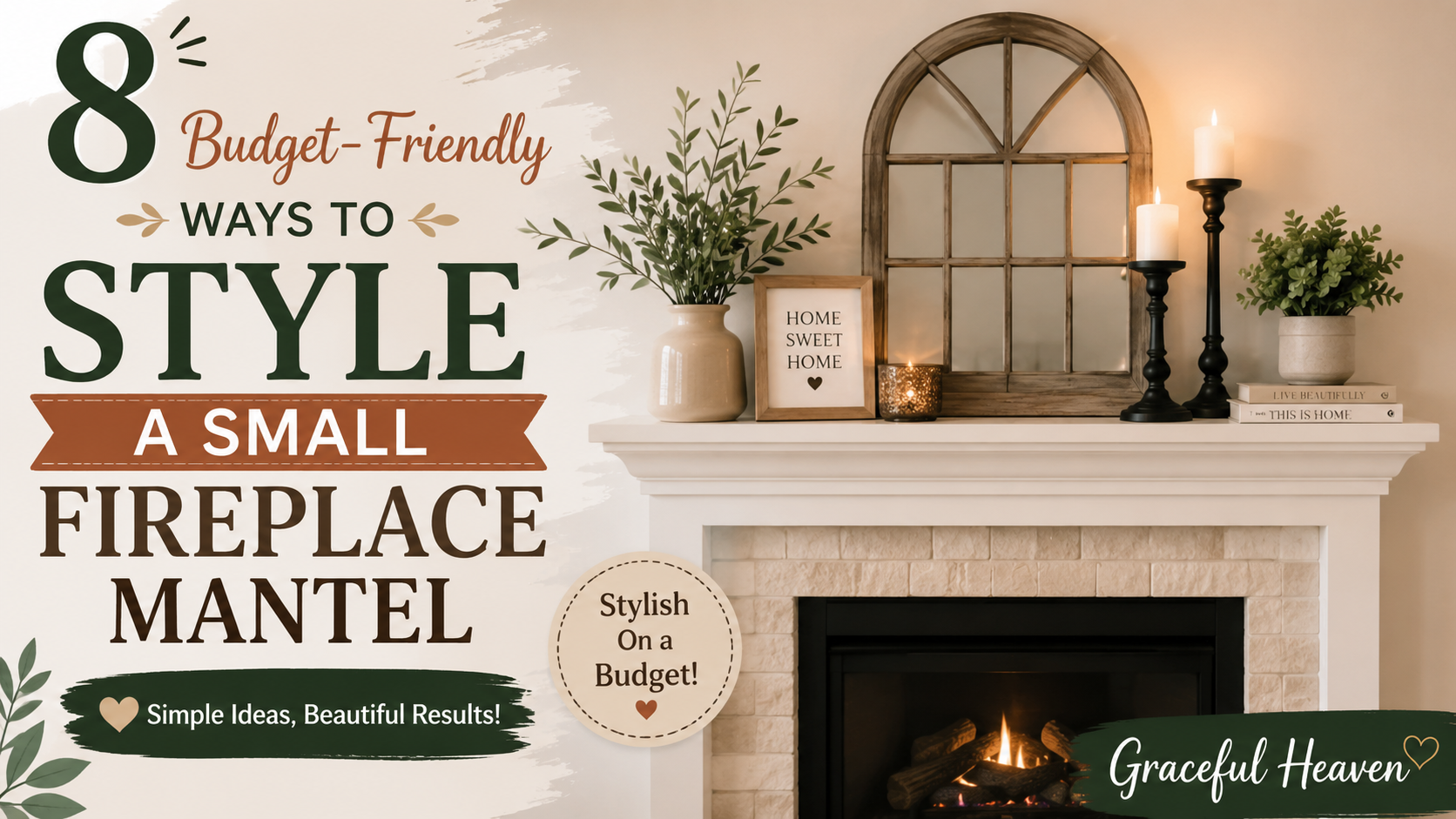
Start with a mirror leaned against the wall — thrifted, twelve dollars. On the left, stack two books you already own, and top them with a small vase holding a single dried eucalyptus stem from a bouquet you dried last month. In the center, a small tray holds three candles of varying heights, all the same cream color for cohesion. On the right, lean two small frames together, overlapping slightly, holding black and white photos printed at the drugstore for under two dollars each.
Total cost: maybe fifteen dollars, most of it spent on the mirror. Total transformation: complete.
That’s the whole philosophy here. Small mantels don’t need big budgets. They need thoughtful choices, a little patience, and a willingness to use what you already have sitting around your house.
Give one of these ideas a try this weekend. Pick just one — the tray trick, the book stack, whatever speaks to you — and see how much a single small change shifts the whole room. Your mantel doesn’t need to be big to feel finished. It just needs you to show up and arrange it with a little care. 🔥✨