
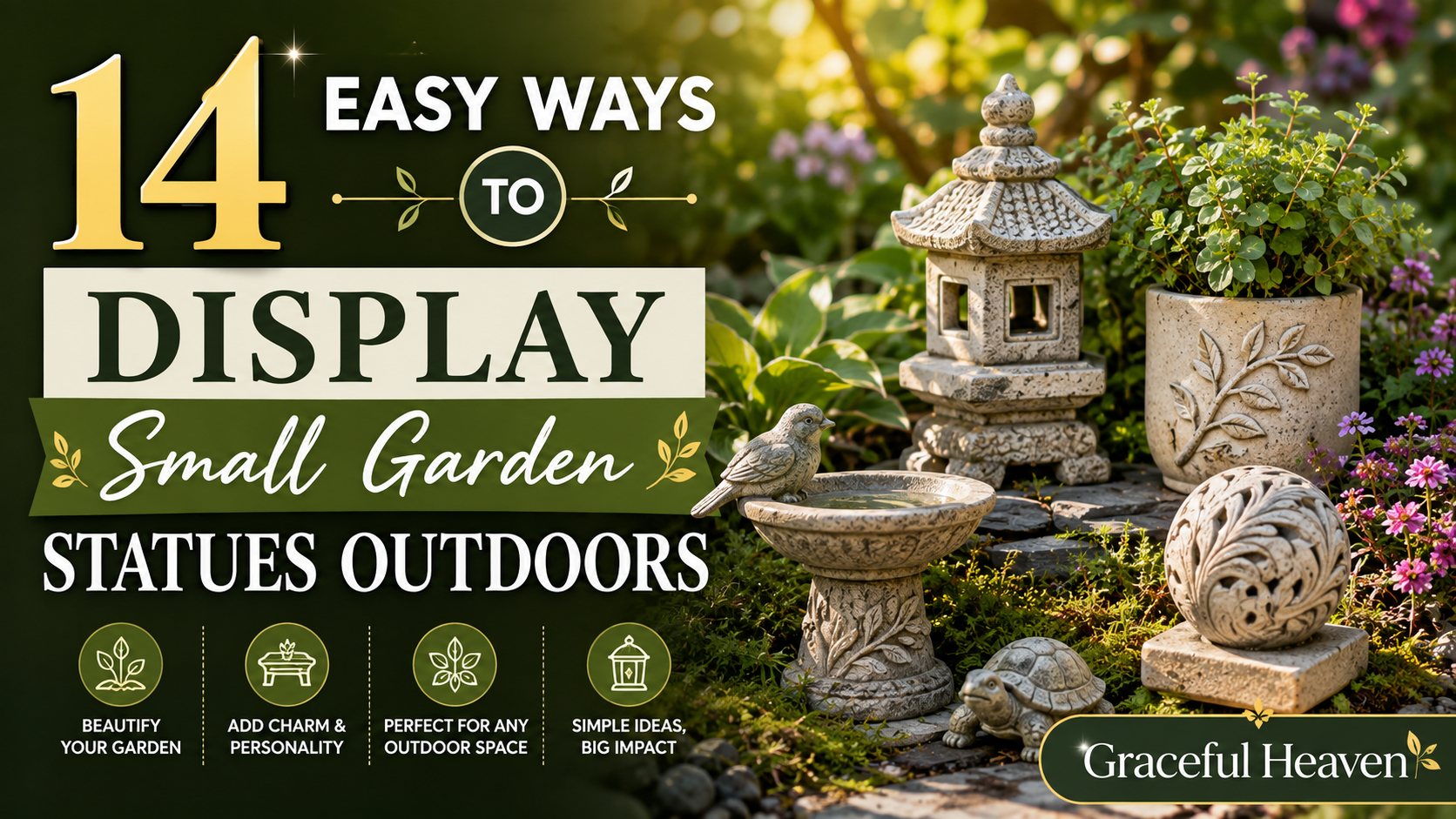
You bought that little stone rabbit. Or maybe it was a mossy frog, a gnome with a chipped hat, or a tiny Buddha you picked up at a flea market on a whim. 🐰 Now it’s sitting on your porch step, kind of homeless, waiting for you to figure out where it actually belongs.
Here is the thing. Small garden statues get overlooked all the time. People spend hours picking the perfect plants, then just plunk a statue wherever there’s an empty gap. That’s a missed opportunity. A little figure, placed with intention, can turn an ordinary flower bed into something that makes visitors stop and smile.
So let’s fix that. Below are fourteen ways to show off your small statues outdoors, no landscaping degree required.
1. Nestle It Into a Flower Bed Like It Grew There 🌸
Don’t just set the statue on top of the soil. Sink the base slightly into the dirt, then let low plants creep around the edges. Creeping thyme, alyssum, or baby’s tears work great for this.
The goal is believability. You want someone to glance over and think, “Huh, has that little owl always been there?” A statue that looks planted, not placed, reads as intentional design instead of an afterthought.
Try tucking it near the front of the bed, not dead center. Off-center placement almost always looks more natural.
2. Frame It With a Miniature Rock Garden
Rocks and small statues are a classic pairing for a reason.
Grab a handful of river stones or a few flat slate pieces. Arrange them loosely around your statue, like they tumbled there naturally over years. Add a few sprigs of sedum or hens-and-chicks tucked between the stones. This works especially well for gnomes, frogs, and turtles, since it mimics their natural habitat.
Keep the rock sizes varied. Uniform rocks look manufactured. A mix of big, medium, and pebble-sized stones feels like it belongs to the earth.
3. Perch It on a Tree Stump or Log Slice
Got an old stump in the yard you haven’t dealt with yet? Turn it into a pedestal.
A small statue elevated on a stump gets instant visual weight. It’s now a focal point instead of ground clutter. If you don’t have a real stump, a cross-cut log slice from a garden center does the same job. Just make sure it’s treated for outdoor use, or it’ll rot within a season or two.
This spot works wonderfully for fairies, woodland creatures, and anything with a whimsical, storybook vibe. ✨
4. Use It As a Path Marker
Think about it. Garden paths are functional but often kind of boring.
Placing a small statue every few feet along a walkway does two things at once. It guides the eye forward, and it gives each stretch of path its own little personality. You don’t need a matching set either. Mismatched statues along a winding path can actually feel more charming than a uniform row.
A single frog at a bend. A rabbit peeking from behind a hosta three feet later. It becomes a small scavenger hunt for guests.
5. Tuck It Beneath a Shrub or Bush
Low shrubs create natural little caves and shadowed pockets. Perfect real estate for a statue.
Slide your figure partway under the foliage so it’s peeking out rather than fully exposed. This creates a sense of discovery. Visitors have to actually look to find it, and finding something small and unexpected is genuinely delightful.
Boxwood, hydrangea, and dwarf conifers all create good cover for this trick.
6. Build a Tiny Fairy Garden Scene Around It
This one takes a bit more effort, but it’s worth it.
Pick a small corner of a planter or garden bed. Add miniature furniture, a pebble path, maybe a thimble-sized birdbath, and your statue becomes the star character of an entire tiny world. Kids especially love these. So do adults, honestly, even if they won’t admit it.
You can find fairy garden accessories at most craft stores, or you can improvise with bottle caps and twigs. Either way works.
7. Set It Near a Water Feature
Statues and water just go together. Something about the sound of trickling water paired with a still figure creates a peaceful, almost meditative corner.
Place your statue at the edge of a small pond, a birdbath, or even a simple ceramic water bowl. Frogs, turtles, and cranes are the obvious pairing, but honestly, anything works here. There’s something calming about a fixed object next to moving water.
Just be mindful of material. Not every statue handles constant moisture well, so check what yours is made of first.
8. Hang It From a Branch or Hook
Who says statues have to sit on the ground?
Some small figures, especially lightweight resin ones, come with a built-in loop or can have one added. Hang them from a low tree branch or a shepherd’s hook near your flower bed. This adds vertical interest to a space that might otherwise feel flat.
A hanging fairy or bird figure catches light differently throughout the day. Morning shadows, afternoon glare, evening silhouette. It’s like getting three different statues for the price of one.
9. Use a Vintage Object As an Unexpected Pedestal
Skip the traditional pedestal. Grab something with character instead.
An old milk crate, a weathered wooden chair with the seat removed, a stack of vintage books sealed in resin, even an upside-down terracotta pot. Any of these can lift your statue up and give it a story. This approach works especially well if your garden already leans toward a rustic or eclectic style.
A statue on a boring plastic stand says “I bought this yesterday.” A statue on a rusted bicycle basket says “this garden has a personality.”
10. Group Three Statues in Odd Numbers
Designers talk about this constantly, and for good reason: odd numbers feel more natural to the eye than even ones.
Instead of placing one lonely statue in a bed, try grouping three small figures of varying heights together. A tall one, a medium one, a short one. Cluster them, don’t line them up in a row. This creates depth and makes the arrangement feel like a little community rather than a random scatter.
Two matching statues on either side of a doorway is different, that’s a symmetrical statement. But for garden beds specifically, odd groupings tend to win.
11. Set One Inside a Hollow Log or Stump Cavity
If you can find a stump or log with a natural hollow, you’ve hit the jackpot.
Place a small woodland creature statue right inside the cavity, like it lives there. This is one of those details that stops people mid-stroll. It looks less like decoration and more like you stumbled on something magical during a walk in the woods.
Squirrels, owls, and hedgehogs suit this spot perfectly.
12. Mount It on a Simple Concrete or Wood Base
Sometimes the simplest solution is the right one.
A small concrete paver or a square wood block, painted or left natural, gives your statue a clean, deliberate presence. This works best for more formal garden styles, think Zen gardens, minimalist courtyards, or modern landscaping with clean lines. 🪴
Skip the ornate scrollwork pedestals if your yard leans contemporary. A plain, flat base often looks more intentional than an overly decorative one.
13. Position It Along a Window View
Here’s a trick a lot of people forget entirely.
Think about where you actually sit inside your house. Your kitchen window. Your reading chair by the living room glass. Place a small statue directly in that sightline, just outside. Now you get to enjoy it daily, even when you’re not physically out in the garden.
A statue tucked in a spot nobody sees defeats half its purpose. Put at least one where you’ll actually look at it.
14. Add It to a Container Garden or Large Planter
Not every statue needs to live in the ground.
Large planters and pots have plenty of room for a small figure nestled among the flowers or trailing vines. This is a fantastic option for patios, balconies, or renters who can’t dig into the actual yard. It’s portable too. Rearrange your whole setup in five minutes if you get bored of the layout.
A tiny gnome poking out from under a spilling petunia plant in a pot? Genuinely delightful. 🍃
A Few Quick Rules of Thumb
Before you run outside and start rearranging, keep a couple things in mind.
Scale matters. A six-inch statue gets swallowed by a massive open lawn. Give small figures small, cozy settings where they can actually be noticed.
Sight lines matter too. Walk your property the way a guest would, not the way you already know it. Would a first-time visitor’s eye actually land on your statue, or is it hiding behind an overgrown hedge?
Material dictates placement. Resin and concrete tolerate the elements fine. Painted ceramic or wood pieces might need a covered spot, or at least a seasonal check-in.
Don’t overcrowd. One or two well-placed statues beat six scattered randomly across the yard. Less genuinely is more here.
Wrapping This Up
Your little statue has been waiting long enough. Pick a spot from this list, maybe two, and give it a proper home this weekend. Grab a coffee, walk your yard slowly, and look at it with fresh eyes. You’ll probably spot the perfect corner faster than you think. 🌿