
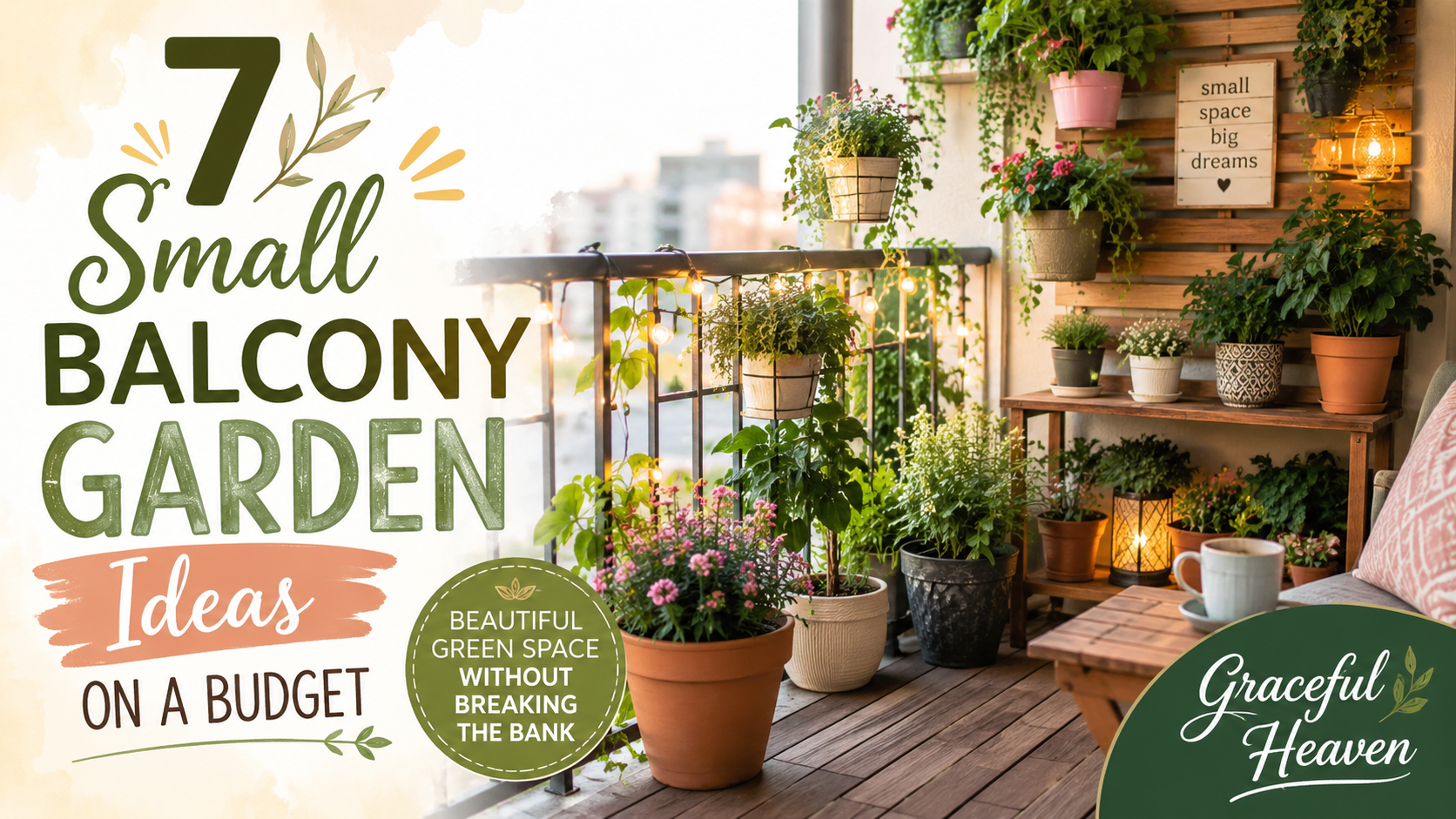
Your balcony is small. Your budget is smaller. And yet you still want that green, leafy corner where you can drink your coffee and pretend you’re somewhere else for ten minutes. Good news: you don’t need a design degree or a fat wallet to make it happen.
Most balcony garden articles show you photos of spaces that cost more than a used car. Ours doesn’t. We’re talking about real tricks, real prices, and real plants that survive actual neglect. Because let’s be honest — most of us forget to water things sometimes.
So here are seven ways to turn that concrete slab into something worth stepping outside for. 🪴
1. Go Vertical Before You Go Broke 📏
Floor space is the enemy here. There’s not much of it, and every inch matters.
So stop thinking about your balcony as a floor. Start thinking about it as a wall.
Vertical planters — the kind that hang, stack, or hook onto railings — let you grow ten plants in the footprint of two. A shoe organizer with clear pockets, hung on the wall, works shockingly well for herbs. Fill each pocket with soil, poke in a basil seedling or two, and you’ve got a living spice rack for less than the price of takeout.
Railing planters are another cheap win. They clip right onto the balcony edge, so you’re using space that would otherwise just sit there doing nothing. A basic plastic railing planter runs you somewhere between $8 and $15. Fill it with trailing plants like petunias or sweet potato vine, and suddenly your balcony has a “spilling over with life” look that Pinterest boards charge you for.
Here’s the thing about vertical gardening: it also protects your plants. Wind hits a balcony hard, especially higher up. Plants tucked against a wall get some shelter that ones sitting exposed on the floor just don’t.
2. Recycle Containers Instead of Buying New Ones ♻️
You do not need matching terracotta pots from a garden center. Seriously.
Some of the best planters are things you already own or things people throw away. Old paint buckets, cracked mugs, tin cans, wooden crates from the back of a grocery store — all of it can hold soil and a plant.
Think about an old colander. Drainage holes already built in. Hang it from a hook, fill it with trailing ivy, and it looks intentional, almost designer. Nobody needs to know it used to strain your pasta.
A few quick swaps that cost basically nothing:
- Wine bottles cut in half → small succulent planters
- Wooden pallets (often free from hardware stores) → herb shelving
- Yogurt tubs → seed starters
- Old tea tins → mini herb pots with a rustic look
One warning, though. Always drill or poke drainage holes before you plant anything. Waterlogged roots kill more balcony plants than bad weather ever does. This step takes two minutes and saves you weeks of frustration.
There’s something satisfying about growing a tomato plant in a bucket that used to hold drywall compound. It feels like you outsmarted the whole system.
3. Pick Plants That Basically Refuse to Die 🌵
Let’s talk honestly for a second. If you’re gardening on a budget, you probably don’t have hours to spend fussing over delicate plants. You need survivors.
Succulents are the obvious pick, and for good reason. They store water in their leaves, so missing a watering day (or five) won’t kill them. A single succulent cutting can cost as little as $2, and many will root and multiply if you just leave them alone.
But don’t stop at succulents. Herbs like mint, rosemary, and thyme are practically indestructible, and they double as free ingredients for dinner. Mint in particular grows so aggressively that gardeners often warn you to keep it contained — which, on a tiny balcony, is actually a bonus. You want something that fills space fast.
Marigolds deserve a mention too. They’re cheap, they bloom for months, and they keep bugs away from other plants. Think of them as the bodyguards of your balcony garden.
Here’s a quick comparison to help you choose:
| Plant | Cost (approx) | Sunlight Needed | Forgiveness Level |
|---|---|---|---|
| Succulents | $2–$5 | Full sun | Extremely high |
| Mint | $3–$4 | Partial shade OK | Very high |
| Marigolds | $2–$3 (seeds) | Full sun | High |
| Rosemary | $4–$6 | Full sun | High |
| Petunias | $3–$5 | Full sun | Medium |
Start with three or four of these. Get comfortable. Then expand once you know what your specific balcony’s light and wind situation actually looks like, because every balcony is a little different.
4. Make Light Work For You, Not Against You ☀️
Here’s a mistake almost everyone makes early on: buying plants before checking how much sun the balcony actually gets.
Spend one day watching the light. Just observe. Note when the sun hits your balcony directly, and when it doesn’t. A north-facing balcony behaves completely differently from a south-facing one, and no amount of good soil fixes a plant sitting in the wrong light.
If your balcony gets blasted with sun most of the day, lean into heat-lovers — succulents, marigolds, rosemary, and most herbs will thrive. If you’re stuck in shade for most of the afternoon, look at ferns, begonias, or leafy greens like lettuce and spinach, which actually prefer to avoid intense direct sun.
This step costs nothing. Zero dollars. But it’s probably the single biggest factor in whether your budget garden survives past June or turns into a sad collection of brown stems by July.
5. Build a Micro Herb Garden for the Kitchen 🌱
This one pays for itself, and fast.
A small pot of basil at the grocery store costs around $3 to $4 — and it’s usually dead within a week because store-bought herbs aren’t built for longevity. Compare that to growing your own basil, which, once established, keeps producing for months.
You really only need a windowsill-sized strip of balcony for this. Three or four small pots — mint, basil, chives, and parsley — cover most of what a home cook reaches for regularly. Total setup cost, including pots and seeds? Often under $20.
Picture this: it’s a Tuesday evening, you’re making pasta, and you realize you’re out of basil. Instead of running to the store, you step onto the balcony, snip a few leaves, and you’re done. That’s the entire appeal of a kitchen herb garden. Convenience, dressed up as gardening.
Keep the pots close to the door if you can. The closer they are, the more likely you’ll actually use them instead of forgetting they exist.
6. Use Multi-Level Shelving Instead of Spreading Out 🪜
Small ladder shelves, plant stands, even old bookshelves — these change the entire game for a tight balcony.
Instead of lining pots along the floor in a single row (which eats up walking space fast), stack them. A three-tier plant stand gives you triple the growing area in the same footprint as one shelf. Some cost as little as $15 at discount stores, and secondhand ones show up on marketplace apps constantly for even less.
There’s a design bonus here too. Plants at different heights create visual depth. It stops looking like a flat row of pots and starts looking like an actual garden, layered and full. Small spaces benefit enormously from this kind of height variation — it tricks the eye into thinking there’s more going on than there really is.
If money is genuinely tight, an old wooden crate stacked on cinder blocks does almost the same job. Nobody said this had to look like a catalog photo. It just has to work.
7. Add One Cozy Touch That Isn’t a Plant 🕯️
Okay, this last one isn’t strictly “gardening,” but hear us out.
A garden isn’t just plants. It’s a space you actually want to sit in. And that means adding at least one element that makes the balcony feel finished, not just functional.
This could be a $10 solar fairy light string wrapped around the railing. It could be a secondhand cushion tossed onto a plastic chair. It could be a small rug that hides the ugly concrete floor underneath. None of these things grow, but all of them change how the space feels the moment you walk out there.
Think about why people love cafes with plants everywhere. It’s rarely just the plants. It’s the plants plus the seating, the lighting, the little details that say “someone cared about this corner.” Your balcony deserves the same treatment, even on a tight budget.
Solar lights are especially worth it. They charge during the day and switch on automatically at night, so you get ambiance without touching your electric bill. A ten-dollar strand can completely change how the space feels after sunset.
Quick Budget Breakdown 💸
Curious what a full seven-idea balcony makeover might realistically cost? Here’s a rough estimate for a modest setup:
- Railing planters (2): $20
- Recycled containers: Free–$10
- Starter plants (succulents, herbs, marigolds): $25
- Small plant stand: $15
- Solar fairy lights: $10
- Secondhand cushion or small rug: $10
Total: roughly $80–$90 for a balcony that looks, and feels, completely transformed.
Compare that to a single visit from a landscaping service, and you’ll see why doing it yourself, slowly and cheaply, makes so much more sense for a small space.
A Few Things Nobody Tells You
Balcony gardening has quirks that don’t show up in most guides. Wind is stronger up high than people expect, especially past the third or fourth floor — secure your pots, or a gust will knock them right over. Check with your landlord or building rules before drilling anything into railings or walls; some buildings are stricter than you’d think. And watering needs change fast in small containers, since they dry out quicker than garden beds do. A pot that needed water twice a week in spring might need it daily once summer heat kicks in.
None of this should scare you off. It just means paying attention, the same way you’d pay attention to anything you actually care about.
Start Small, Start Today 🌸
You don’t need all seven ideas at once. Pick one. Maybe it’s the herb pots by the kitchen door, or the string of solar lights on the railing. Get that going first, see how it feels, then build from there.
A balcony garden isn’t a weekend project that finishes and stays finished. It grows with you, quite literally, one pot and one small decision at a time. So go grab that old bucket sitting in your storage closet. Your future balcony self will thank you. 🌿✨