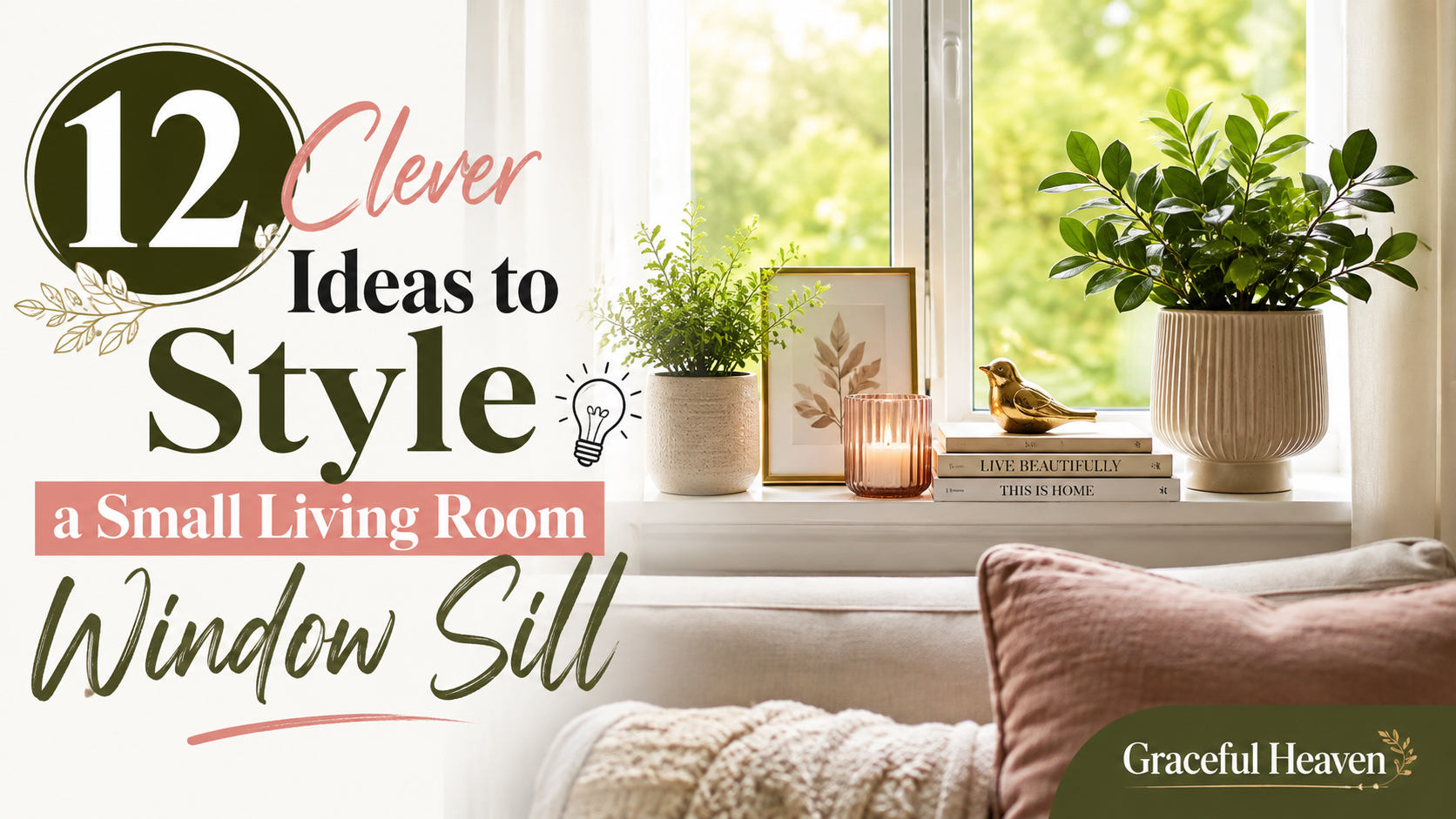
That little ledge under your window is doing nothing right now. 😐 Maybe it’s holding a stack of mail. Maybe it’s just collecting dust and the occasional dead fly. Either way, you’re sitting on free real estate and you don’t even know it.
A window sill is small, sure. But small doesn’t mean unimportant. It’s one of the first things your eye catches when you walk into a room, because it sits right in the path of natural light. Style it well, and it becomes a tiny stage that makes the whole living room feel more finished. Ignore it, and it just looks… unfinished, even if everything else in the room is on point.
So let’s fix that. Here are twelve ideas, ranging from five-minute fixes to slightly more involved projects, that’ll turn your sill into something worth looking at. 🌿
1. Start With One Statement Plant, Not Five Small Ones
Here’s a mistake almost everyone makes: cramming a bunch of tiny pots onto the sill because “more greenery equals more style.” It doesn’t. It just looks cluttered.
Instead, pick one plant with real presence. A trailing pothos that spills over the edge. A snake plant with tall, architectural leaves. Something with a shape that reads clearly from across the room.
Think about it this way — a single bold plant acts like a punctuation mark. Five small ones just read as noise. If you already own a bunch of little succulents, group them into one tray instead of scattering them. That way they act as one visual unit, not six competing ones.
2. Use the Light, Don’t Fight It
Window sills get direct sun for at least part of the day, and that’s a gift most other surfaces in your living room don’t get. 🌞
Colored or textured glass takes full advantage of this. A small collection of vintage glass bottles, even in mismatched colors, throws little pools of colored light onto your floor or wall by afternoon. It costs almost nothing — thrift stores are full of glassware nobody wants — and it changes character throughout the day without you lifting a finger.
Avoid opaque, heavy objects here. Save those for your shelves. The sill is where light should be allowed to pass through and do something interesting.
3. Build a Tiny “Collection” Instead of Random Objects
Random objects on a sill look like clutter. A collection looks like intention. The difference is entirely in your head, but visually, it’s obvious to anyone walking in.
So pick a theme. It doesn’t need to be fancy:
- Smooth stones from beach trips
- Small ceramic bowls in different glazes
- Miniature clay pots, even empty ones
- Old cameras or binoculars if you’re into that kind of thing
Three to five items from the same “family” will always look more deliberate than eight unrelated ones. That’s just how the eye reads groupings.
4. Let a Trailing Vine Do the Work of a Frame
A window without any greenery around it can feel a little stark, almost clinical. A trailing plant fixes that instantly.
Pothos, string of pearls, or even a philodendron will happily grow along a sill and drape down the side of the window frame over time. Give it six months and it starts to look like the window was designed with the plant in mind, not the other way around. 🌱
Quick tip: turn the pot a quarter turn every week or two. Plants lean toward light, and an evenly grown trail looks a lot more graceful than one that’s curling off to one side.
5. Swap Seasonal Decor Instead of Buying New Stuff
You don’t need a fresh haul from a home decor store every few months. Rotate what you already own instead.
Picture this: in spring, a small vase with a few stems of eucalyptus or fresh tulips. Summer, a citrus bowl with actual lemons — smells good, looks good, costs almost nothing. Fall brings a couple of mini pumpkins or pinecones. Winter, maybe just a single pillar candle and some pine sprigs.
None of this needs to be Pinterest-perfect. The point is variety over time, not a permanent showroom display.
6. Add Height With a Bud Vase, Not a Big One
A common sill mistake is going too tall or too wide. Remember, this ledge is narrow. Anything oversized will look like it’s about to tip off.
A slim bud vase with one or two stems solves the height problem without eating up all the space. Even a single stem of eucalyptus, or a dried pampas grass sprig, adds a vertical line that draws the eye upward — toward the window, toward the light, toward the whole point of the space.
7. Use Books as Both Decor and Function
Books aren’t just for shelves. 📚 A small stack — two or three, spines facing whichever direction looks best in your room — gives the sill some structure and a bit of texture that plants and glass alone can’t provide.
Bonus move: use them as a base. Set a small plant or candle on top of the stack. That instantly adds visual height variation, which is one of the easiest tricks in styling. Flat surfaces feel boring. Varied heights feel curated, even if you spent zero extra dollars.
8. Let a Single Piece of Art Lean Against the Glass
This one surprises people, but it works really well. A small framed print or a piece of original art, leaned casually against the window pane (not hung, just leaned), catches the light beautifully and adds personality that plants can’t.
Choose something with a simple frame in a neutral tone, so it doesn’t compete with the view outside. And keep the size modest — you want it to fit comfortably within the sill’s width, with a little breathing room on either side.
9. Consider a Miniature Herb Garden If You Cook
If your living room window gets a solid four to six hours of sun, why not make it work for dinner too? 🌿
Basil, thyme, mint, and chives all do well in small pots on a sunny sill. It’s practical — snip what you need while you’re cooking — and it smells incredible. Plus, herb pots tend to be small and uniform in size, which naturally gives you that “collection” look we talked about earlier without any extra effort.
Just watch the soil. Sills near windows can get surprisingly hot in direct sun, and herbs dry out fast in a small container.
10. Play With Texture, Not Just Color
Most people think about color first when they style a space. Fair enough — color is the flashy part. But texture is what makes a small vignette feel rich instead of flat.
Combine a rough, unglazed ceramic pot with a smooth glass vase. Add something woven, like a tiny rattan basket, next to something metallic, like a brass candle holder. The contrast between rough and smooth, matte and shiny, does more visual work than a coordinated color palette ever will.
Here’s the thing — this doesn’t require buying new items either. Walk around your house. You probably already own three or four objects with wildly different textures.
11. Keep a Curtain or Sheer Fabric in the Picture
Don’t forget the fabric hanging right above your styled sill. A sheer curtain softens harsh light and gives your little display a gentle, diffused backdrop instead of harsh midday glare.
If your current curtains are heavy blackout panels, consider a lighter sheer layer just for daytime. It changes the whole feel of the sill setup — softer shadows, gentler light, a much calmer overall look. And in the evening, when you pull heavier curtains closed, your carefully arranged items disappear behind fabric instead of sitting there under a bright bulb, mismatched with the room’s mood lighting.
12. Rotate a Small Object That Means Something to You
Save the most personal spot for last. Not every item needs to be “designed.” One small object with real meaning — a shell from a trip, a gift from a friend, a tiny sculpture you picked up somewhere random — anchors the whole display with something no store-bought item can replicate.
This is the piece that makes visitors ask “where did you get that?” And honestly, that’s a much better conversation starter than a perfectly symmetrical arrangement of matching vases. 💬
A Few Ground Rules That Tie It All Together
Before you run off and start rearranging, a couple of quick principles worth keeping in mind.
Odd numbers work better than even ones. Three items feel intentional. Two feel like you forgot a third. This isn’t some rigid design law carved in stone — it’s just how our brains process asymmetry as more natural and less staged.
Leave empty space on purpose. A sill packed edge to edge, with zero breathing room, reads as cluttered no matter how nice each individual object is. Aim to fill roughly two-thirds of the space, tops.
Match scale to your window. A tiny sill on a small window needs restraint — one plant, one small object, done. A wider ledge under a bay window can handle a fuller arrangement, maybe even a small bench cushion with pillows if the depth allows for it.
Think about the view from outside too. If your living room faces the street, whatever you put on that sill is basically a mini display for anyone walking by. Not a reason to overthink it, just something worth a glance before you commit.
Putting It All Together
You don’t need to do all twelve of these at once. Honestly, please don’t — that would just create the exact clutter problem we’ve been trying to avoid this whole time.
Pick two or three ideas that fit your space and your habits. If you already cook a lot, the herb garden idea (#9) probably makes more sense than a fussy art arrangement. If you travel often, lean into idea twelve and let your souvenirs tell the story. If your living room gets amazing afternoon light, the glass bottle trick (#2) will pay off every single day.
Small spaces reward small, thoughtful choices. A window sill isn’t going to redesign your entire living room. But it’s the kind of detail that people notice without quite knowing why they noticed it — and that’s exactly what good styling is supposed to do. 🪴✨
So go look at that sill right now. What’s sitting on it today, and what would you rather see there tomorrow?