Your sink tray is probably the most overlooked square foot in your entire kitchen. 🙃
Think about it. You touch it a dozen times a day. You rest your hands on the edge of it while you’re waiting for the kettle to boil. And yet most of us just toss a sponge, a bottle of dish soap, and maybe a stray rubber band on there and call it done.
Here’s the thing: that little tray sits in your eyeline more than almost anything else in the room. It’s right there, front and center, every time you glance up from chopping onions or washing a mug. So why does it always look like an afterthought? 🤔
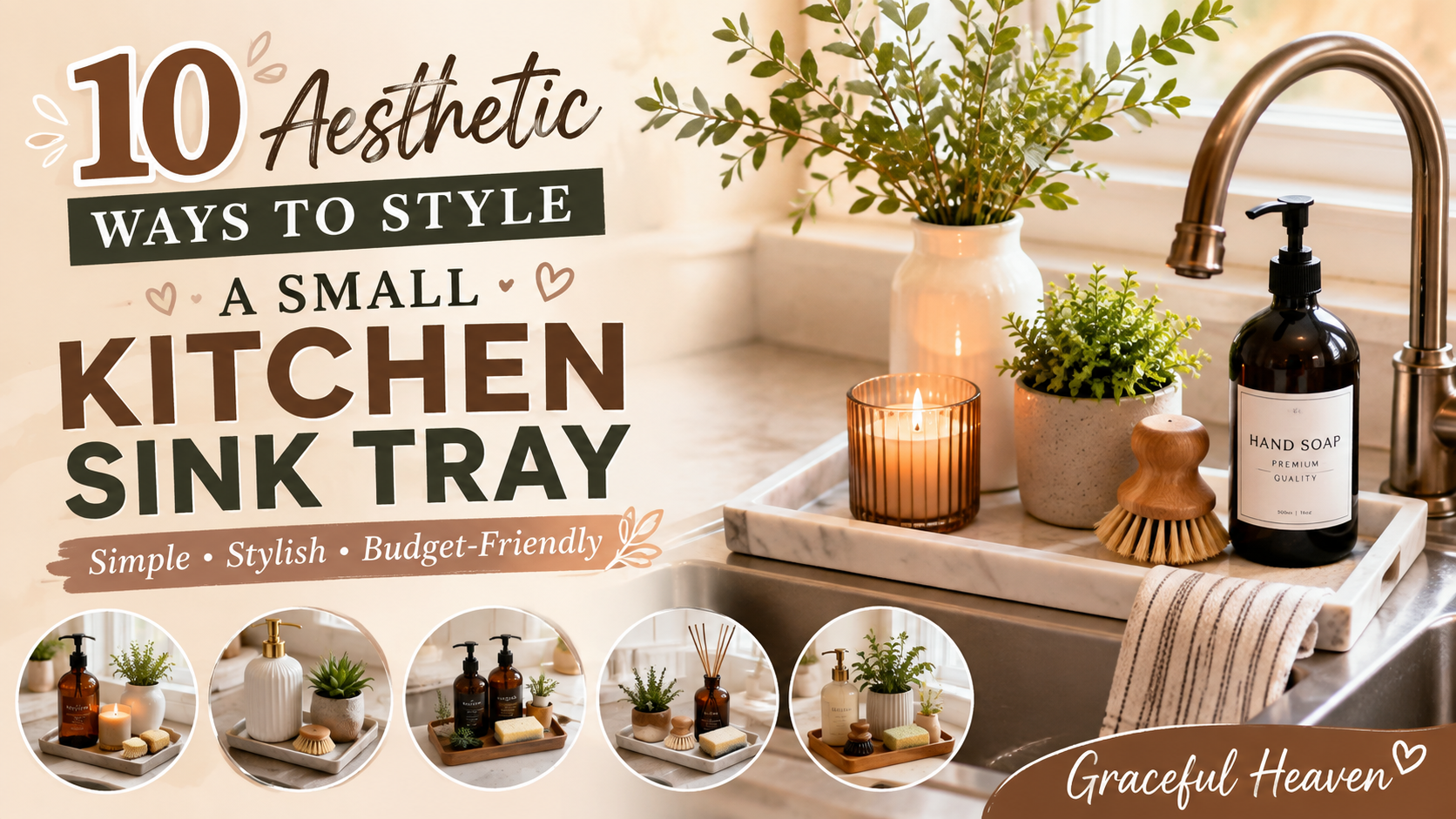
We’re going to fix that. Below are ten real, doable ways to turn that tiny strip of counter or that ceramic dish next to your faucet into something that actually looks intentional. No expensive renovations. No trips to a design showroom. Just small, smart choices that add up.
1. Pick One Material and Commit to It 🪵
Mismatched materials are the fastest way to make a small space feel chaotic. A wooden soap dispenser next to a plastic scrub brush next to a metal caddy? That’s visual noise, and your eyes don’t know where to land.
So choose a lane. Maybe it’s all matte black. Maybe it’s all natural wood and cream ceramic. Pick something and stick with it across every item on that tray.
This doesn’t mean everything needs to match perfectly, like a matching luggage set. It means the materials speak the same language. A dark walnut soap dish, a stoneware sponge holder, a black dish brush with a wooden handle — these all live comfortably together because they share tone and texture, even if the shapes are different.
2. Swap the Sponge Holder for Something You’d Actually Display 🧽
Nobody wants to look at a soggy sponge sitting in a plastic tray full of gray water. Nobody.
Ceramic sponge holders have quietly become one of the best small upgrades you can make in a kitchen. They drain better, they don’t stain, and honestly, they just look like something you’d find in a boutique hotel bathroom rather than a dorm room sink.
Look for one with drainage holes and slightly raised feet. That little detail keeps water from pooling underneath, which means less grime and fewer water rings on your counter. It’s a tiny change. But it’s the kind of tiny change that makes people ask, “wait, where did you get that?”
3. Use a Tray Within the Tray 🍽️
This sounds almost too simple to work, but it does. Take a small ceramic or wooden catch-all tray and place it inside your sink area to corral the smaller items — a bar of soap, a scrubber, a tiny bottle of hand cream.
Grouping things onto a mini tray creates a sense of order that scattered items just can’t match. It’s the same psychology behind why a cluttered desk looks calmer the second you put a tray under your pens and notebooks. Containment reads as intentional, even when the contents are basically the same stuff you had before.
Try a round rattan tray for a warm, textured look, or a slim marble one if you’re leaning more modern. Either way, the boundary line does a lot of visual work for very little effort.
4. Go Refillable With Your Soap 🧴
Plastic pump bottles are functional. They are also, almost universally, ugly. The labels peel, the plastic yellows over time, and the shapes rarely match anything else in your kitchen.
Refillable glass soap dispensers solve this instantly. You pour your regular dish soap into a glass bottle with a metal pump, and suddenly your sink area looks like it belongs in a design magazine spread. 💧
Amber glass bottles hide soap discoloration nicely and give off a slightly apothecary, old-world feel. Clear glass works if your soap has a nice color to it. Either way, this single swap tends to have the biggest visual impact for the smallest amount of effort on this entire list.
5. Bring in One Living Thing 🌿
A tiny plant near your sink does something a bottle of soap never could. It brings life into a space that’s otherwise all hard surfaces and utility.
You don’t need anything demanding. A small pothos cutting in a water-filled bud vase will actually thrive near a sink, since it loves the humidity and the light hand-watering it gets when you splash it accidentally. A rosemary sprig in a tiny jar works too, and bonus, you can snip it for cooking.
Keep the container small and low. You’re not trying to build a garden here. You just want one soft, organic shape to contrast with all the straight lines and hard edges of soap bottles and faucets.
6. Layer in Texture With a Linen or Waffle Cloth 🧺
Flat surfaces need a little rumple somewhere, or they start to feel sterile. A folded waffle-weave dish towel draped loosely over the edge of your tray does exactly that.
Choose a neutral tone — oatmeal, sage, soft charcoal — and fold it with a bit of looseness rather than a stiff, hotel-corner precision. You want it to look like you just set it down, not like you measured the fold with a ruler.
This works on a psychological level too. A soft textile next to hard ceramic and metal creates contrast, and contrast is basically the secret ingredient behind every styled photo you’ve ever admired on a home decor account. 📸
7. Choose a Consistent Color Story, Not Just “Neutral” 🎨
A lot of people hear “aesthetic kitchen” and immediately default to all white, all beige, everything neutral. That’s fine. But it can also read as flat if there’s no anchor point.
Instead, pick one small accent color and let it show up twice. Maybe it’s a dusty terracotta soap dish and a terracotta-rimmed drinking glass nearby. Maybe it’s a deep forest green dish brush paired with a green ceramic plant pot.
Repetition of a single color, even in small doses, tricks the eye into thinking the whole space was thoughtfully planned. It wasn’t hard. You just bought two things in the same shade.
8. Get the Proportions Right 📏
This one’s less about what you put on the tray and more about how much. A small sink area can only comfortably hold two or three items before it starts feeling crowded.
So edit ruthlessly. If you’ve got a soap dispenser, a sponge holder, and a small plant, that might genuinely be enough. Everything else — extra sponges, backup soap bottles, that random pot scrubber — belongs under the sink, not on top of it.
Designers call this “negative space,” and it matters more than people realize. The empty gaps between objects are just as important as the objects themselves. Without them, even beautiful items start to look like clutter.
9. Match Your Hardware Finish 🔧
Here’s a detail almost nobody thinks about: the finish on your faucet, your soap dispenser, and your dish brush handle should roughly agree with each other.
If your faucet is brushed nickel and your soap pump is shiny chrome and your dish brush handle is matte black, your eye bounces between three different metallic tones without ever settling. It’s subtle, but it’s the kind of thing that makes a space feel “off” even when you can’t quite say why.
You don’t need to rip out your faucet to fix this. Just choose your next few sink accessories in a finish that complements what’s already installed. Brass with brass. Black with black. It’s a small rule, and it pays off disproportionately.
10. Rotate With the Seasons 🍂🌸
The best-styled kitchens don’t stay static all year. A tiny bud vase with a single stem changes everything, and it costs almost nothing to swap out.
In spring, try a sprig of eucalyptus or a single tulip. In fall, a dried wheat stalk or a small branch with rust-colored leaves. Winter might call for a sprig of pine. Summer, a stem of lavender.
This isn’t about spending money on fresh flowers every week, though you certainly can if that’s your thing. It’s about giving yourself permission to notice this small corner of your kitchen again, instead of letting it fade into the background the way it usually does.
A Few Combinations to Try This Weekend 🛠️
If you want a starting point rather than ten separate ideas floating around in your head, here are a few pairings that tend to work well together:
The Minimalist: A matte black ceramic sponge holder, a refillable amber glass soap bottle, and nothing else. Clean, quiet, done in under ten minutes.
The Cottage Kitchen: A rattan tray-within-a-tray, a folded waffle towel in sage green, and a small pothos cutting in a glass jar.
The Warm Modern: A terracotta soap dish, brass-finished dish brush, and a single dried stem in a bud vase.
None of these require a shopping spree. Most people already own half of what’s listed. It’s really just a matter of rearranging what you have and swapping out the one or two items that are dragging the whole look down — usually the plastic sponge holder, if we’re being honest. 😅
Why This Actually Matters
You might be thinking, it’s a sink tray, why does this deserve this much thought? Fair question.
But small, high-traffic spots in your home carry more visual weight than their size suggests. You see this spot every single day, probably more than you look at your living room coffee table or your bedroom nightstand. When it’s styled with even a little intention, it changes how the whole kitchen feels — calmer, more considered, more like a space someone actually cares for.
And the flip side is true too. A messy, mismatched sink tray can undercut an otherwise beautiful kitchen, the same way one wrinkled shirt can throw off an otherwise sharp outfit.
So next time you’re near the sink, take thirty seconds. Look at what’s sitting there. Ask yourself if it deserves the spot it’s taking up. Small edits, repeated often enough, are how a kitchen starts to feel like yours. 🏡✨